WAV | 24-bit / 96 kHz – 1,72 GB
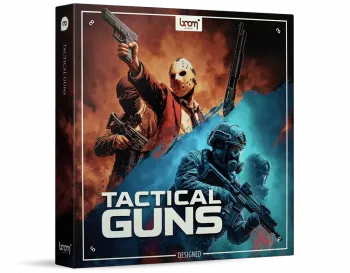
TACTICAL GUNS(Designed 版)
警用配枪・军用制式・犯罪缴获。源自真实服役武器的机枪、手枪、步枪、霰弹枪音效库。
多数枪械音效库仅按口径分类枪声,不考虑角色使用背景。TACTICAL GUNS 另辟思路:库内全部 25 款武器均为现实中警察配枪、军队列装或是犯罪分子实际使用的型号。一次购买即可覆盖刑侦剧、军事题材、黑道犯罪场景,几乎每把武器都配套录制专属枪械操作音效。
武器配套操作音效 几乎每款武器都录制完整操作声音:握持拾取、更换弹匣、保险开关、上膛换弹。射击前的机械细节,在开火之前就能刻画出角色是老练或是慌乱。
28 通道录制、多距离多视角 每一次枪声最多同时采集 28 路音轨,距离覆盖贴身至 100 米,提供 8 种录制视角。室内镜头切换至楼顶远景,可直接调用对应距离实录素材,无需人工伪造远近效果。
适配各类制作工作流 全部文件携带 UCS 通用分类元数据,在 DAW、剪辑软件、游戏引擎中均可快速检索武器与开火模式;针对战术、警匪类游戏,单声枪响支持触发式、物理驱动音频系统调用。
预混成品音效层(Designed Layer) 按武器类别(突击步枪、机枪、手枪、步枪、霰弹枪、冲锋枪)提供 850 + 套预制序列,分为近距、远距、厚重、机械四种风格,包含单发、点射、全自动模式。 所有预制片段全部来源于原始录制素材,并非二次生成,保证整套库音色统一。
录音采集环节 枪声录制同步采集最多 28 路通道,每个视角对应与射手不同距离:0 米衣领 / 腕部拾音捕捉贴身细节;1m/2m/3m AB 制式;5m/15m MS 制式;5m/100m XY 制式;20m ORTF3D;50m 高阶 Ambisonic 环绕声,支持沉浸式 360° 全景音频输出。
枪械操作录制环节 独立录制武器操作音效:拾取枪械、拨动保险、装卸弹匣、快慢 / 快慢速换弹。绝大多数武器配套专属操作音;两款武器采用替代素材:Kel‑Tec KSG 使用 SPAS‑15 操作音效,Tavor TAR‑21 使用 AKS‑74U 操作音效。
库的核心特色 区别于单纯按口径归类音效的产品,本库的核心逻辑是:谁在使用这把武器?用于什么剧情场景?。侦探手中的格洛克 17 与士兵背负的 AK‑47 不可以互相替代,正是这套现实背景决定库内武器清单。
三大现实使用场景
- 警用配枪:Glock17、Remington 870,适合蹲守、突袭、警情突发等街头警匪桥段。
- 军队列装:AK‑47、PKM、AWM、FN FAL、SIG MCX、HK G36、M16、Steyr AUG、Tavor TAR‑21 等各国制式武器,适配战争、军事题材。
- 犯罪分子使用:VZ 61 蝎式冲锋枪(大量有组织犯罪有据可查)、AK‑47;Uzi 更多来自流行文化认知。
25 款武器中 22 款具备详实现实使用背景,其余仅基于音色与技术特征收录,不做不实现实背景宣称。
距离与视角优势 同一场戏镜头会不断切换远近,靠拉伸音频模拟距离会产生失真;本库直接录制从贴身到百米的真实远近素材,镜头切换直接调用对应视角录音,听感无缝。
操作音效的叙事价值 上保险、拉套筒、压力下换弹,这些开火前后的机械声,比枪声本身更能塑造人物情绪;专属配套操作音效,让道具声音拥有表演感。
适用场景 ‑ 刑侦犯罪剧集,需要真实制式手枪、巡逻霰弹枪音效 ‑ 战争军事影视剧集,需要现役步枪、班组支援武器 ‑ 黑帮、劫案、武器走私题材,需要现实犯罪常用武器 ‑ 游戏音频,制作战术、警匪战斗系统,拥有完整副武器、霰弹枪素材,不只有步枪 ‑ 剪辑师,处理枪战镜头室内‑室外、近‑远镜头切换
实用制作技巧 ‑ 优先按照剧情角色身份挑选武器,其次再听音色;警用 / 军用 / 犯罪三个分类可以快速筛选 25 款武器 ‑ 第一人称、室内近距离:选用 Collar 衣领、Wrist 腕部视角;远景切换 AB、ORTF3D 视角,过渡无破绽 ‑ 在枪声前叠入操作音效,铺垫紧张氛围;弹匣检查、保险咔哒声用来塑造人物性格,不只是机械音效 ‑ 快速剪辑先用 Designed 预制片段;遇到特殊镜头视角,再调取原始 Construction Kit 底层素材
软件兼容性 标准 WAV 格式,兼容所有支持 WAV 的音频、视频编辑软件。文件嵌入完整元数据,遵循 UCS 通用分类标准,可被 Soundminer、Soundly、Basehead 等音频管理工具检索识别。
CARRIED BY POLICE. ISSUED TO ARMIES.
STOLEN BY CRIMINALS.
Machine Gun, Pistol, Rifle and Shotgun Sounds From Real Service Weapons
When a script calls for a detective’s sidearm, a squad’s service rifle, or the gun a criminal actually carries, most libraries hand you gunfire sorted by caliber, with no sense of who would use it or why. TACTICAL GUNS starts from a different premise: every one of its 25 weapons is carried by police, issued to armies, or used by criminals. One purchase covers a police procedural, a military scene, and a criminal underworld sequence, each one built from the actual weapons those characters would carry, with matched handling recorded for almost every one.
Carried. Issued. Stolen.
Every weapon in TACTICAL GUNS is one carried by police, issued to armies, or used by criminals. That’s the reason each weapon made the list, not caliber or category alone.
Matched Handling, Weapon by Weapon
Almost every weapon ships with its own recorded handling: grab, mag change, safety, reload. That’s the sound before the shot, the detail that makes a character read as competent, or desperate, before they ever fire.
Twenty-Eight Channels, Multiple Distances
Every shot is captured across up to 28 channels, from point-blank out to 100 meters, delivered across eight named perspectives. Cut between an interior take and a rooftop vantage point using material actually recorded for that perspective.
Built for Any Production Pipeline
UCS-tagged metadata keeps every weapon and fire mode addressable across DAWs, video editors, and game engines alike. For tactical and law-enforcement titles specifically, individual shots stay triggerable for event-driven, physics-based systems.
Close, Distant, Heavy, and Mechanical Mixes
The Designed layer contains 850+ pre-assembled sequences per weapon category (assault rifles, machine guns, pistols, rifles, shotguns, and submachine guns), each mixed as Close, Distant, Heavy, and Mechanical variants across single shots, bursts, and full auto.
Built From the Same Construction Kit Elements
Every Designed sequence is built from the same shot and handling recordings available in the Construction Kit, not separately produced, so the mixes reflect the same weapons and the same recorded detail throughout the library.
The Shot Sessions
The shot sessions captured every take across up to 28 channels simultaneously, each perspective tied to its own distance from the shooter. DPA 4062 mics on the collar and wrist (0m each) captured on-body detail. The AB perspective was recorded at three distances with three different pairs, Sennheiser MKH 416 at 1m, Audix D6 between shooter and muzzle at 2m, and DPA 4007 at 3m. The MS perspective was recorded at two distances, Sanken CMS50 at 5m and Sennheiser MKH8050/MKH30 at 15m, and the XY perspective at two more, Sennheiser MKH8050 at 5m and Sony PCM out at 100m. Schoeps ORTF3D (20m) and a Sennheiser AMBEO VR mic (50m) added 3D capture for immersive formats. Each shot is delivered across eight named perspectives: Collar, Wrist, AB, MS, XY, Ambisonic (AmbiX), and ORTF3D High/Low. A DPA 4062 pair at shoulder height was part of the recording rig too, but isn’t delivered as its own perspective file.
The Handling Sessions
A separate set of sessions covered handling, the mechanical sounds around the shot rather than the shot itself. Grabbing the weapon, working the safety, loading and unloading the magazine, reloading fast and slow. This was recorded per weapon wherever practical. Two exceptions use disclosed substitute handling instead of a dedicated session: the Kel-Tec KSG uses SPAS-15 handling, and the Tavor TAR-21 uses AKS-74U handling.
The Designed Layer
The Designed layer was built last, mixing the raw shot and handling material into ready sequences by category and intensity: Close, Distant, Heavy, and Mechanical. The finished library covers both the component-level workflow and the fast, pre-assembled one.
What’s so special about this library?
The Core Question
Most gunfire libraries sort their content by caliber or weapon type and stop there. A 9mm shot is a 9mm shot, regardless of whether it belongs in a police procedural, a war film, or a heist. TACTICAL GUNS starts from a different question: who actually carries this weapon, and what does that mean for the scene it’s dropped into? A Glock 17 in a detective’s hand and an AK-47 slung over a soldier’s shoulder aren’t interchangeable gunfire, they’re different characters, and that real-world context, not caliber alone, is what shaped which weapons are in this library.
Three Worlds, One Library
The campaign’s own structure makes the point concrete: every weapon in the library belongs to one of three worlds: carried by police, issued to armies, or used by criminals. The highlights below cover a few from each; the full arsenal breakdown follows them.
Carried by Police
The Glock 17 has been standard issue for the Austrian military since 1982 and is carried widely across police departments in the US and Europe. The Remington 870 was long the standard patrol shotgun in American law enforcement: heritage service, not current-day standard, as many departments have since shifted to patrol rifles. These are the street-level weapons: a stakeout, a raid, a traffic stop that goes wrong.
Issued to Armies
The AK-47 is, historically, the most widely used rifle in the world, in heavy and ongoing service across Russian forces and militaries throughout Africa and Eastern Europe. The PKM holds the same territory in a squad support role, confirmed across Eastern Europe, Africa, and the Middle East. The AWM was adopted by the British Armed Forces as its long-range sniper rifle, fielded by the 16 Air Assault Brigade, the Royal Marines, and the RAF Regiment. The set is rounded out by service rifles including the FN FAL, SIG MCX, and M14. The HK G36 has been standard issue for the German Bundeswehr since 1997; the IMI Galil served Israeli infantry for decades and was adopted as the standard army rifle of Colombia and South Africa (as the Vektor R4); the M16 has been the standard rifle of the US Armed Forces since 1964 and remains in service with dozens of allied militaries; the Steyr AUG is the current standard rifle of Austria, Ireland, Luxembourg, and Tunisia; and the Tavor TAR-21 became the standard infantry rifle of the Israel Defense Forces in 2018.
Used by Criminals
The VZ 61 Skorpion is the strongest weapon in this library for documented criminal use: confirmed use by the IRA, the Italian Red Brigades, the Red Army Faction, and, more recently, organised crime gangs in Sweden and the UK. The AK-47 belongs here too, as one of the most trafficked rifles in the world. The Uzi carries a “criminal gun” reputation that owes more to pop culture and desirability than to a documented crime record; it’s included here on that understanding, not overstated.
The Full Arsenal
Twenty-two of the library’s 25 weapons carry a documented real-world claim strong enough to place them in one or more of the three worlds; the rest are included for their sound and technical profile, without an unsupported claim attached.
Distance and Perspective
The distance and perspective range solves a separate, practical problem. A scene rarely stays at one distance or one camera position, and re-recording or pitch-shifting a single perspective to fake another is audible. Capturing every shot across up to 28 channels, from point-blank to 100 meters, means the cut from an interior to a rooftop vantage point uses real material recorded for that exact perspective, not an approximation of it.
The Handling Layer
The handling layer addresses what happens before and after the shot, which is often what actually sells a scene. A character checking the safety, working a slide, or reloading under pressure tells the audience more about their state of mind than the gunfire itself. Matched per weapon, that handling turns a static prop sound into a performing one.
Use cases:
– Police procedural and crime drama scenes needing service-accurate sidearms and patrol shotguns
– War and military film and TV needing real service rifles and squad support weapons
– Organised crime, heist, and trafficking sequences needing weapons with a real criminal-use record
– Game audio teams building tactical or law-enforcement combat systems that need real spread across sidearms and shotguns, not another pile of rifles
– Editors cutting between interior and exterior or near and far camera positions within the same gunfight
Tips:
– Match the weapon to the scene’s real-world logic first (who would actually carry this), then to the sound. Carried, issued, or used is the fastest way to narrow 25 weapons down to the right one
– Use the Collar or Wrist perspective for a first-person or close interior cut, then switch to the AB or ORTF3D perspective at distance for the same event without an audible seam
– Layer the handling recordings ahead of the shot to build tension before a scene turns; a mag check or a safety click reads as character, not just mechanics
– Start from a Designed mix for a fast edit, then drop down to the Construction Kit shot and handling elements when a scene needs a perspective the mix doesn’t cover
COMPATIBLE SOFTWARE
This BOOM Library of creature sounds comes as WAV files, meaning you can import and work with them in any software that can handle this file type.
RICH METADATA EMBEDDED
To provide you with the fastest and easiest workflow possible, all files contain extensive metadata like file description & keywords to quickly find the sounds you’re looking for. Metadata can be read and processed by audio management tools.
ACCORDING TO THE NEW UCS STANDARD