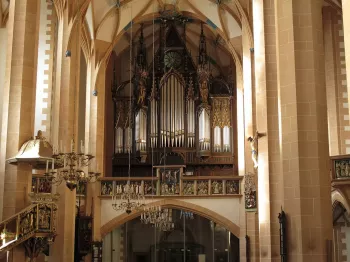
Hauptwerk | 16.29 GB
1884年 E.F. Walcker管风琴(作品424号)
圣安妮教堂(St. Annenkirche),安纳贝格-布赫霍尔茨 / 德国萨克森州
简介与历史
这台1884年由E.F. Walcker制造的管风琴(作品424号)位于埃尔茨山脉的安纳贝格-布赫霍尔茨圣安妮教堂,是与里加和维也纳并列的极少数几乎完全保持原貌的晚期浪漫主义Walcker管风琴之一。
这台三键盘乐器最初拥有 56个音栓(含3个自由簧片)和机械锥形风箱,在音色上是同年建造的里加大教堂管风琴的”小妹妹”。
仅10年后(1894年),管风琴便按当时的审美进行了改造:换装气动机械、正面两侧加装装饰假管、在新锥形风箱上增加了9个音栓。
1960年代,气动系统开始出现故障,1975年管风琴停止使用,教堂开始进行修复工作。当时没有资金进行基本维修,曾考虑过多种方案——包括重建旧琴或完全拆除。
幸运的是,经过漫长讨论,管风琴制造师Eule的远见卓识推动了将乐器恢复到接近原始状态的决定,以保留其几乎原汁原味的声音。为使三个键盘触感一致,所有键盘和音栓控制均加装了Barker杠杆。此外还安装了寄存器锁定装置(Walcker Stop Prolongation),允许演奏中重置音栓。
利用Walcker音栓比例,在1894年的锥形风箱上新增了9个音栓。
德国统一后,1992年开始了出色的修复与重建工作。Hermann Eule管风琴制造公司(包岑)耗时 29,000工时。
这台德国晚期浪漫主义最重要、最美丽的乐器之一,于 1995年10月22日 重新启用。
圣安妮教堂的混响时间长达 7秒
录音技术
乐器于 2013年10月 以 48 kHz、24 bit 录制,采用OrganArt首创的多释放技术(Multi-Release Technique)。
所有音栓均以短、中、长三种触键力度录制,以实现最佳声学映射。
Vox humana(人声音栓) 额外以原始颤音效果录制。
音栓规格
调律:平均律(a1=432 Hz)
第一键盘 Manual I(C–f3,可扩展至C–g3)
| 编号 | 音栓名称 |
|---|---|
| 01 | Principal 16′ |
| 02 | Flauto major 16′ |
| 02 | Quinte 5 1/3′ |
| 04 | Principal 8′ |
| 05 | Gemshorn 8′ |
| 06 | Bourdon 8′ |
| 07 | Hohlflöte 8′ |
| 08 | Doppelflöte 8′ |
| 09 | Quintatön 8′ |
| 10 | Viola di Gamba 8′ |
| 11 | Dolce 8′ |
| 12 | Octav 4′ |
| 13 | Gemshorn 4′ |
| 14 | Rohrflöte 4′ |
| 15 | Quinte 2 2/3′ |
| 16 | Oktav 2′ |
| 17 | Mixtur 4′ 6排 |
| 18 | Cornett 4-5排 |
| 19 | Mixtur 2′ 6排 |
| 20 | Fagott 16′(自由簧片) |
| 21 | Trompete 8′ |
| 22 | Clairon 4′ |
第二键盘 Manual II(C–f3,可扩展至C–g3)
| 编号 | 音栓名称 |
|---|---|
| 01 | Quintatön 16′ |
| 02 | Principal 8′ |
| 03 | Gedeckt 8′ |
| 04 | Spitzflöte 8′ |
| 05 | Salicional 8′ |
| 06 | Aeoline 8′ |
| 07 | Voix celeste 8′ |
| 08 | Octav 4′ |
| 09 | Flauto dolce 4′ |
| 10 | Viola 4′ |
| 11 | Quinte 2 2/3′ |
| 12 | Piccolo 2′ |
| 13 | Superoctave 1′ |
| 14 | Mixtur 4-5排 |
| 15 | Cymbal 2 2/3′ 3排 |
| 16 | Oboe 8′(自由簧片) |
第三键盘 Manual III(C–f3,可扩展至C–g3)
| 编号 | 音栓名称 |
|---|---|
| 01 | Bourdon 16′ |
| 02 | Geigenprincipal 8′ |
| 03 | Lieblich Gedackt 8′ |
| 04 | Concertflöte 8′ |
| 05 | Harmonika 8′ |
| 06 | Principal 4′(J) |
| 07 | Traversflöte 4′ |
| 08 | Fugara 4′ |
| 09 | Waldflöte 2′ |
| 10 | Mixtur 4排 |
| 11 | Harmonia aetheria 2 2/3′ 3排 |
| 12 | Clarinette 8′(自由簧片) |
| 13 | Vox humana 8′ |
踏板 Pedal(C–d1,可扩展至C–f1)
| 编号 | 音栓名称 |
|---|---|
| 01 | Principalbaß 32′ |
| 02 | Principalbaß 16′ |
| 03 | Violonbaß 16′ |
| 04 | Subbass 16′ |
| 05 | Bourdon douce 16′ |
| 06 | Octavbaß 8′ |
| 07 | Flötenbaß 8′ |
| 08 | Octave 4′ |
| 09 | Violoncello 8′ |
| 10 | Mixtur 5 1/3′ 6排 |
| 11 | Posaune 32′ |
| 12 | Posaune 16′ |
| 13 | Trompete 8′ |
| 14 | Clairon 4′ |
音栓来源说明:
所有音栓均为 1884年原装Walcker(定音与音高),除以下例外:
- (J):Jehmlich 1894年(III-Principal 4、P-Posaune 32′,后经Eule改造)
- 以及 1995年Eule新增的音栓(采用Walcker定音法)
主页:https://www.organartmedia.com/en/1884-1995-e-f-walcker-organ
The 1884 E.F. Walcker organ (op. 424) of the St. Annenkirche in Annaberg-Buchholz in the Erzgebirge is along with Riga and Vienna one of the few almost completely original surviving Walcker organs of the High Romanticism.
The three-manual instrument originally had 56 stops (including 3 free reeds) and mechanical cone chests and is sonically the smaller sister of the Riga Cathedral organ, built in the same year. Only 10 years later, the organ was rebuilt with pneumatic action, widening of both sides of the façade with dummy pipes and enlarged with nine stops on new cone chests – according to the tastes of the time.
In the 1960s, the pneumatic system started to fail and in 1975 the organ was put out of service when restoration work started on the church. There was no money for basic repairs. Different variants for the reconstruction of the old organ as well as a complete dismantling of the organ were considered.
Fortunately, after lengthy discussions, the foresighted assessment by organ builder Eule gave the impulse to restore the instrument to its original state with its almost original preserved sound. In order to achieve the same touch on all three manuals, the organ received Barker levers for all the manuals as well as the stop controls. In addition, a register lock (a so-called Walcker stop prolongation) allows resetting stops while playing.
The instrument was enlarged with nine stops on the 1894 cone chests using Walcker scalings.
The excellent restoration and reconstruction of the instrument took place after the German reunification in 1992. It took Hermann Eule organ builders of Bautzen 29,000 man hours.
The re-inauguration of one of the most important and most beautiful instruments of the German High Romanticism took place on October 22, 1995.
The St. Anne’s church has a reverberation time up to 7 s
Recording technique
The instrument was recorded in October 2013 with 48 kHz, 24 bit, using the multi-release technique introduced by OrganArt.
The stops were recorded with multiple releases for short, medium and long key attacks for optimal acoustical mapping.
The Vox humana was additionally recorded with the original tremulant sound.
Specification:
Organ Temperament: Equal (a1=432 Hz)
Manual I (C–f3)*
01. Principal 16′
02. Flauto major 16′
02. Quinte 5 1/3
04. Principal 8′
05. Gemshorn 8′
06. Bourdon 8′
07. Hohlflöte 8′
08. Doppelflöte 8′
09. Quintatön 8′
10. Viola di Gamba 8′
11. Dolce 8′
12. Octav 4′
13. Gemshorn 4′
14. Rohrflöte 4′
15. Quinte 2 2/3′
16. Oktav 2′
17. Mixtur 4′ 6-fach
18. Cornett 4-5 fach
19. Mixtur 2′ 6-fach
20. Fagott 16′ (free reed)
21. Trompete 8′
22. Clairon 4′
Manual II (C–f3)*
01. Quintatön 16′
02. Principal 8′
03. Gedeckt 8′
04. Spitzflöte8′
05. Salicional 8′
06. Aeoline 8′
07. Voix celeste 8′
08. Octav 4′
09. Flauto dolce 4′
10. Viola 4′
11. Quinte 2 2/3′
12. Piccolo 2′
13. Superoctave 1′
14. Mixtur 4-5fach
15. Cymbal 2 2/3 3-fach
16. Oboe 8′ (free reed)
Manual III (C–f3)*
01. Bourdon 16′
02. Geigenprincipal 8′
03. Lieblich Gedackt 8′
04. Concertflöte 8′
05. Harmonika 8′
06. Principal 4′ (J)
07. Traversflöte 4′
08. Fugara 4′
09. Waldflöte 2′
10. Mixtur 4-fach
11. Harmonia aetheria 2 2/3 3-fach
12. Clarinette 8′ (free reed)
13. Vox humana 8′
Pedal (C–d1)*
01. Principalbaß 32′
02. Principalbaß 16′
03. Violonbaß 16′
04. Subbass 16′
05. Bourdon douce 16′
06. Octavbaß 8′
07. Flötenbaß 8′
08. Octave 4′
09. Violoncello 8′
10. Mixtur 5 1/3′ 6-fach
11. Posaune 32′
12. Posaune 16′
13. Trompete 8′
14. Clairon 4′
* extendable C-g3, C-f1
All ranks are original 1884 Walcker (voicing and pitch), except
(J): Jehmlich 1894 (III-Principal 4, P-Posaune 32′, reworked by Eule)
and the 1995 added Eule stops (Walcker voicing)